
"Produced in South Central"
2000 article(s) found

Interpretation of individual coffee bean flavor differences among American beans, African beans and Asian beans
The world of coffee is rich and interesting. Coffee from different continents has its own characteristics. Coffee is the product of the equator to 15 degrees north latitude. Therefore, it is produced in South America, Asia and Africa. However, the coffee produced from the equator to 15 degrees north latitude is so strong and bitter that only some people who drink coffee and do not know its taste will like it. In fact, the best coffee should come from the north.

The treatment of Brazilian Minas Coffee an introduction to the taste of the manor flavor description in the region produced by grinding scale
Brazilian Minas Coffee processing method Grinding scale production area Manor Flavor description taste introduction: at present, there are 2 million hectares of land in Brazil for growing coffee, with a maximum of more than 70% being Arabica. These beans will eventually be sent to large roasters in various countries, that is, Santos (in the name of the port of export santos, not the producing area), because of the coffee competition after 2000.

A brief introduction to the Origin and Development of Flavor and Taste of Larez Yaoke Coffee Bean in Central and Southern Puerto Rico
The best coffee in Puerto Rico is YaucoSelecto, which means Selecto. Grand Larez and Yaoke coffee (GrandLares-Yauco) are produced in the southwest of the island, while Larez coffee is produced in the south-central part of the island. Yaocote's choice of coffee, which is grown only on three farms in the southwest of the island, is fragrant and has a long aftertaste. This kind of coffee sells at a high price

Description of Flavor of Colombian Sun-cured Coffee introduction to the characteristics of varieties produced by grinding scale
The flavor description of Colombian sun-cured coffee the characteristics of the varieties produced in the grinding scale introduce that Colombia is fortunate to have Atlantic and Pacific ports, which helps to reduce the cost of coffee transportation. In South America, she is the only country with this condition. The main production areas of Colombia are in the central and eastern mountains. The most important plantations along the central mountains

Introduction of Guatemala Antigua Coffee with rich taste
Guatemala is located in the tropics, the northern and eastern coastal plains have a tropical rain forest climate, the southern mountains have a subtropical climate, the year is divided into two dry and wet seasons, with the wet season from May to October and the dry season from November to April of the following year. The narrow and fertile flatlands on the Pacific side of Guatemala have a tropical climate. The central plateau is also the cultural center of Guatemala, where the year-round temperature ranges from 1300 to 1800 meters.

A brief introduction to the Market Price of Fine Coffee Bean varieties in Los Congo Manor in Central America
Beautiful sour taste, moderate mellow Nicaraguan coffee belongs to the Central and South American style coffee, although the acidity is not very high, but it feels refreshing. The mellow degree is also not high, but the overall feeling is just right, neither thin nor too strong. To make it easier to accept. The taste of red wine can be vaguely felt in the shallow sour taste, which is also a major feature of Nicaraguan coffee.

Coffee trees grow around the equator.
Coffee trees grow in tropical or subtropical agricultural gardens centered around the equator and called coffee belts. Most of the coffee production is between the Tropic of Cancer, 25 degrees north of the tropical or subtropical equator and 30 degrees south of the equator. An area with an annual average temperature of 16-25 degrees Celsius, no Frosts Descent and rainfall of 1600-2000 mm. At present, coffee is mainly produced by seven countries.
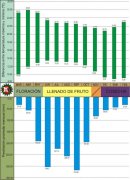
Geographical environment of Honduran coffee producing area in Central and South America cup test of Honduran coffee bean varieties
Honduran coffee has an excellent flavor. Caf de Honduras is synonymous with its people, traditions and living in harmony with the environment. Coffee production is a way of life for more than 100000 families who benefit from the production of this agricultural product. The vast majority of coffee produced in Honduras comes from 210 of the country's 298 municipalities and 15 of the 18 provinces.

Peruvian coffee, famous for its organic coffee.
Peruvian coffee, famous for its organic coffee. Peru (Spanish: Per; Quechua, Aymara: Piruw), the full name of the Republic of Peru (Spanish: Repblica del Per), is a country in western South America. Coffee origin: Peru (Peru) is also a major coffee producer. Up to 98% of Peruvian coffee is grown in forest areas, and most producers are

American boutique coffee beans Peruvian coffee
American Peruvian coffee famous for its organic coffee. Peru (Spanish: Per; Quechua, Aymara: Piruw), the full name of the Republic of Peru (Spanish: Repblica del Per), is a country in western South America. Coffee origin: Peru (Peru) is also a major coffee producer. Up to 98% of Peruvian coffee is grown in forest areas, most of which are raw

Flavor description of Honduran coffee beans by washing method introduction of varieties produced by grinding scale
Honduras Coffee Bean Flavor description by washing method Variety introduction Honduras is a mountainous country in Central and North America with a population of more than 8.3 million and an area of about 112000 square kilometers. Located in the north of Central America. It is bordered by the Caribbean Sea to the north, the Gulf of Fonseca in the Pacific Ocean to the south, Nicaragua and El Salvador to the east and south, and Guatemala to the west. 3/4 of the whole territory
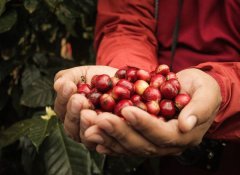
Costa Rica where coffee beans are grown in Central and South America.
Costa Rican coffee cultivation was introduced by Cuba in 1779 and exported for the first time in 1820. There are about 32000 coffee farmers, with an average planting area of less than one hectare (10000 hectares) per farmer. Costa Rica has a population of 41 billion (2006), with a coffee planting area of 82500 hectares and an annual production of 1.7 million bags (60kgs per bag). The annual domestic consumption is 380000 bags.

What is the difference among American beans, African beans and Asian beans? What about the flavor?
Professional coffee knowledge exchange more coffee bean information please follow the coffee workshop (Wechat official account cafe_style) what is the difference between American beans, African beans and Asian beans? What about the flavor? [introduction] the world of coffee is rich and interesting. Coffee from different continents has its own characteristics. Coffee is the product of 15 degrees north latitude from the equator. Therefore, it is found in South America, Asia and Africa.

Coffee trees grow around the equator.
Coffee trees grow in tropical or subtropical agricultural gardens centered around the equator and called coffee belts. Most of the coffee production is between the Tropic of Cancer, 25 degrees north of the tropical or subtropical equator and 30 degrees south of the equator. An area with an annual average temperature of 16-25 degrees Celsius, no Frosts Descent and rainfall of 1600-2000 mm. At present, coffee is mainly produced by seven countries.
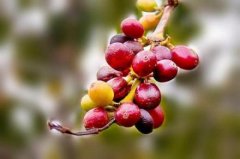
Coffee knowledge equator-centered coffee belt
Most of the coffee production is between the Tropic of Cancer, 25 degrees north of the tropical or subtropical equator and 30 degrees south of the equator. An area with an annual average temperature of 16-25 degrees Celsius, no Frosts Descent and rainfall of 1600-2000 mm. At present, coffee is mainly produced in more than 70 countries. The Big self is located at an altitude of 300,400m, sometimes between 2000 and 2500 meters above sea level.

Introduction to the world's three major coffee producing areas: American coffee estates and detailed explanation of coffee from each producing area
Coffee production in the Americas refers to Central America and South America, and the areas north of Mexico are basically non-producing coffee beans. Coffee production in the Americas is mainly distributed in the Tropic of Cancer to the equator, and several countries in Central America are basically coffee producing countries. Brazil, located in South America, is the world's largest coffee producer. Just like the spread of coffee, it cannot be separated from the era of great navigation.

A brief introduction to the treatment method of Grinding degree and Baking degree of Fine Coffee beans in Los Congo Manor in Central America
Beautiful sour taste, moderate mellow Nicaraguan coffee belongs to the Central and South American style coffee, although the acidity is not very high, but it feels refreshing. The mellow degree is also not high, but the overall feeling is just right, neither thin nor too strong. To make it easier to accept. The taste of red wine can be vaguely felt in the shallow sour taste, which is also a major feature of Nicaraguan coffee.

A brief introduction to the History and Culture of the Origin and Development of Fine Coffee beans in Los Congo Manor in Central America
Beautiful sour taste, moderate mellow Nicaraguan coffee belongs to the Central and South American style coffee, although the acidity is not very high, but it feels refreshing. The mellow degree is also not high, but the overall feeling is just right, neither thin nor too strong. To make it easier to accept. The taste of red wine can be vaguely felt in the shallow sour taste, which is also a major feature of Nicaraguan coffee.

Flavor description of South Minas Coffee Bean in Brazil
The flavor of South Minas coffee beans in Brazil describes the characteristics of the varieties produced in the region: exported from the port of Sao Paulo in Sao Paulo, it is the highest grade of Brazilian coffee. Beans with large grains, green or yellow are usually used for blending. It has a high aroma, moderate bitterness and sour taste like high-grade products. It can also be drunk directly since 1999, an extraordinary cup in Brazil.

Coffee growing area
Brazil (South America), the largest coffee producer, accounts for 1/3 of global coffee consumption and occupies a place in the global coffee market, although Brazil faces several times more natural disasters than other regions. but it has enough acreage to make up for it. There are many kinds of coffee here, but its industrial policy is abundant and cheap, so it is excellent.